



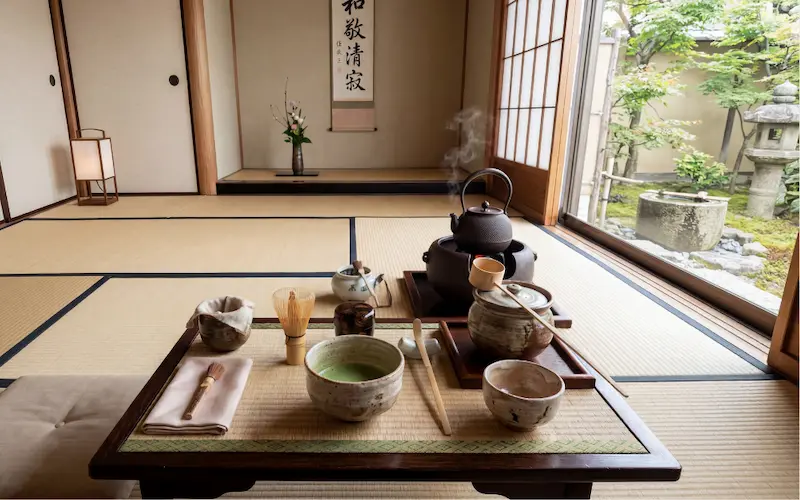
What Are Temae Dogu?
Temae dogu (点前道具) translates roughly as "utensils for performing temae" — temae being the formal choreography of preparing and serving matcha. These are the tools a host handles during the tea ceremony: selected with care, arranged with intention, and afterwards appreciated by guests as objects in their own right. Each piece has a specific name, function, and aesthetic tradition. Together they constitute one of the most refined material cultures in the world.
The tea ceremony — chado, or "the way of tea" — has its own article here on Jules & Avery. What matters for these objects is simply this: every utensil in the set has been refined over roughly five centuries of use, and nothing is there by accident.
The Short Answer
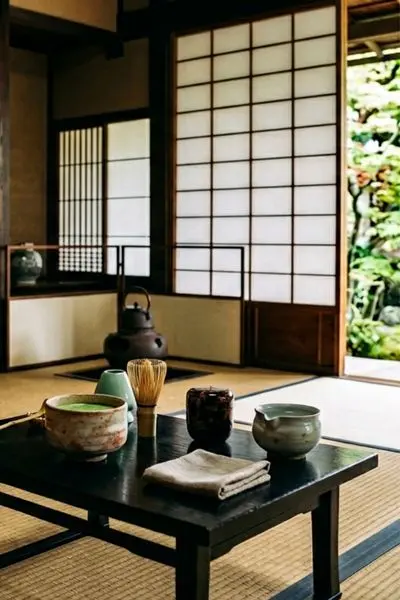
Temae dogu are the ritual utensils used in the Japanese tea ceremony. The core set includes the chawan (tea bowl), chakin (linen cloth), chasen (bamboo whisk), chashaku (tea scoop), and natsume or chaire (tea caddy). Each object is chosen by the host for the occasion — season, guest, and setting all considered.
The Core Utensils — and What They Actually Do
Chawan — 茶碗 — The Tea Bowl
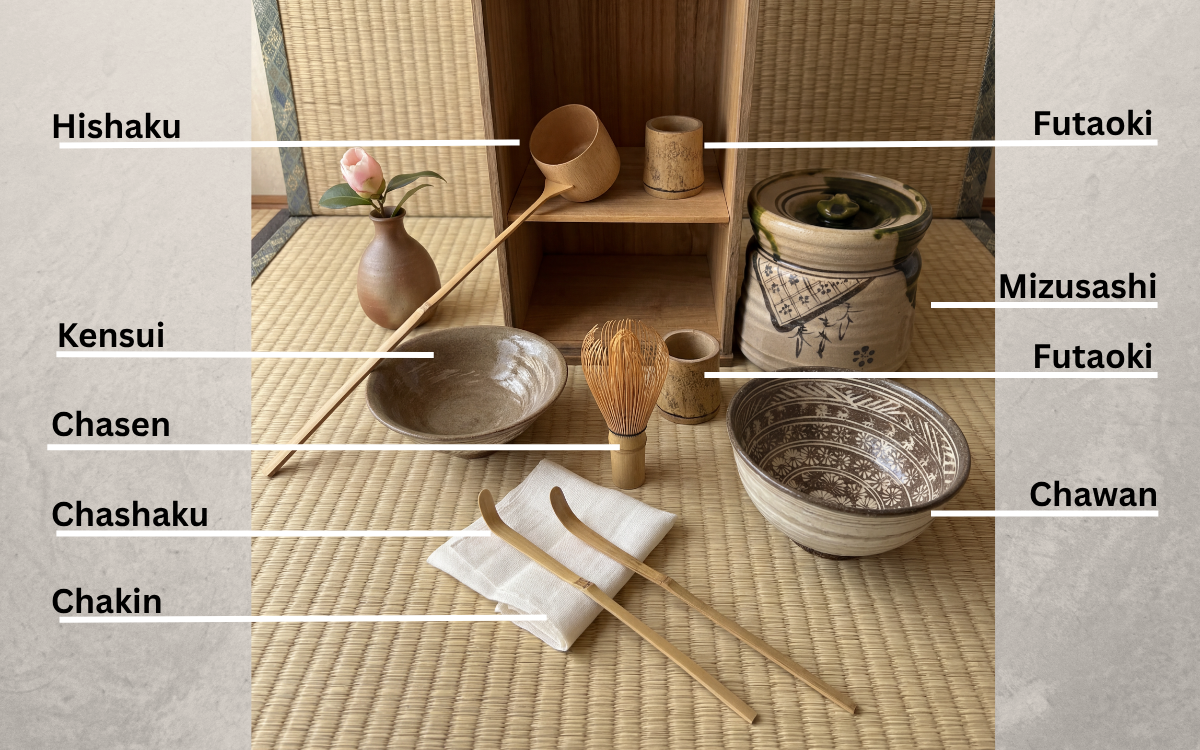
The chawan is the heart of the set. Matcha is whisked and drunk directly from it, and guests are invited to turn and admire it after drinking. A good chawan has weight, character, and what the Japanese call wabi — a beauty that comes not from perfection but from restraint and imperfection. Raku ware, hand-formed and low-fired, is the form most closely associated with the tea ceremony; its irregularity is precisely the point. A fine antique chawan can command extraordinary prices at auction. A well-chosen contemporary piece, made by a living ceramicist, can be just as compelling.
Chasen — 茶筅 — The Bamboo Whisk
Cut from a single piece of bamboo into anywhere from 80 to 120 tines, the chasen is used to whisk matcha powder and hot water into a froth. It is a remarkably engineered object for something made without machinery, and the different styles — named by their number of tines and the school of tea they serve — are each optimized for a slightly different result. A chasen cannot be stored wet; after use it is rinsed and placed on a chasen tate (whisk stand) to dry in its natural curve. Its working life is roughly three months of regular use, after which it is ceremonially retired at a shrine. Transience is built into the object from the start.
Chashaku — 茶杓 — The Tea Scoop
Carved from a single piece of bamboo or occasionally wood, the chashaku is used to measure and transfer matcha from the caddy to the bowl. It is, visually, an extremely modest object — a narrow curve, a knuckle joint, a pointed tip. And yet chashaku carved by tea masters have been preserved for centuries, named, and treasured as primary artworks rather than implements. The name carved on a chashaku's box is sometimes more significant than the piece itself.
Chakin — 茶巾 — The Linen Cloth
A small rectangle of white linen, folded and used to wipe the tea bowl. Its folding is prescribed; its whiteness is maintained. The chakin is the most ordinary-seeming object in the set and possibly the most important — its condition and handling reveal the precision of the host's training immediately.
Natsume and Chaire — 薄茶器 / 茶入 — The Tea Caddies
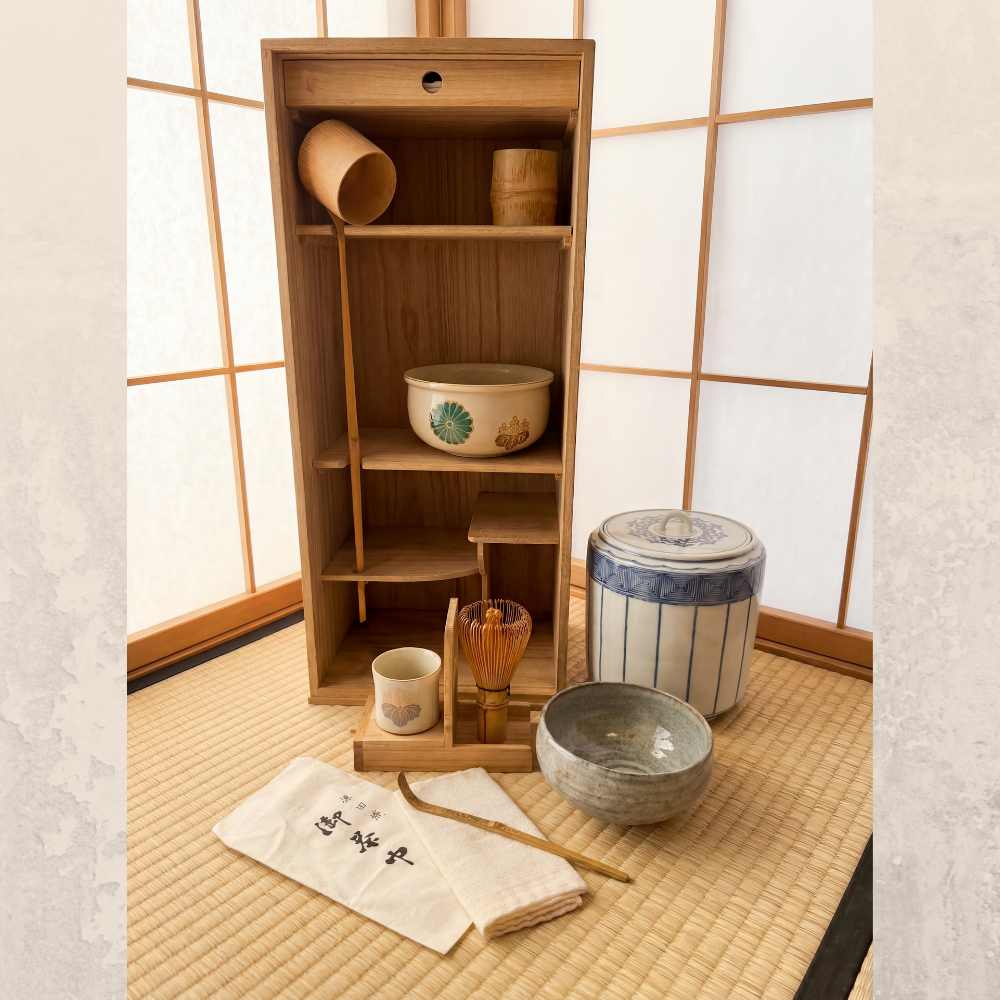
Matcha is stored and presented in a caddy. For thin tea (usucha), this is typically a natsume — a lacquered wooden container named for its resemblance to a jujube fruit, ranging from pocket-sized to palm-filling, in lacquer colours that change with the season. For thick tea (koicha), a ceramic chaire is used, typically with a silk bag (shifuku) stitched specifically to its proportions. The pairing of chaire and shifuku is one of the small but exquisite details that reveals how seriously this tradition takes material correspondence.
Kensui — 建水 — The Waste Water Bowl
Less discussed, but no less considered: the kensui receives the water used to rinse the chawan and chasen. It is the backstage vessel, workmanlike in function but not in form. Antique kensui in bronze, ceramic, or lacquered wood are collected seriously.
Futaoki — 蓋置 — The Lid Rest
A small stand for the lid of the kama (iron kettle) while it is set aside. Futaoki come in a remarkable variety of forms — bamboo sections, ceramic animals, architectural fragments — and choosing an appropriate one for the season or occasion is considered an expression of the host's sensibility. Six bamboo sections is the classic form; everything else is an opportunity for quiet wit.
Mizusashi — 水指 — The Fresh Water Jar
The mizusashi holds the cold water used to replenish the kama and cool the tea to the correct temperature. It sits at the back of the host's arrangement throughout the ceremony — present, purposeful, and often the most visually striking object on the mat. Mizusashi are made in ceramic, lacquered wood, glass, and metal, and their form ranges from the plainly functional to the frankly beautiful. Because the mizusashi is in view for the entire gathering and passed to guests for inspection at the close, hosts choose it with particular care. A fine Shigaraki or Iga mizusashi — rough-fired, ash-glazed, dramatically uneven — can be as compelling as any chawan. The object asks to be looked at slowly.
.png)
Why Collectors Are Paying Attention?
Temae dogu sit at an interesting intersection: they are functional objects with deep craft traditions, a rigorous aesthetic philosophy, and centuries of connoisseurship behind them. For collectors already drawn to Japanese ceramics, lacquerware, or bamboo craft, the crossover is natural. For those newer to the field, temae dogu offer an entry point that is legible — each object has a clear purpose — but inexhaustible in its depth.
Contemporary makers working in the tradition command serious attention. A chawan by an established ceramicist working in Raku or Hagi ware is a significant acquisition. A beautifully made chasen from the Takayama region of Nara prefecture — which has produced chasen for over five hundred years — is a different kind of investment: something you use until it is spent, and then consider replacing with the same care.
The objects do not require you to practice the tea ceremony to be worth owning. But they do ask for a certain quality of attention. That, perhaps, is the point.
FAQS
What does temae dogu mean in Japanese?
Temae dogu (点前道具) translates as "utensils for performing temae" — temae being the choreographed sequence of preparing and serving matcha in the Japanese tea ceremony. Dogu simply means tools or implements. The phrase encompasses the full set of ritual objects a host handles during a tea gathering.
What are the essential utensils in a Japanese tea ceremony set?
The core temae dogu are the chawan (tea bowl), chasen (bamboo whisk), chashaku (tea scoop), chakin (linen cloth), and either a natsume or chaire (tea caddy). Supporting pieces include the kensui (waste water bowl), futaoki (lid rest), and hishaku (ladle). The kama, or iron kettle, is the heat source around which everything else organizes.
Can you collect temae dogu without practicing the tea ceremony?
Entirely. Many serious collectors of Japanese ceramics and lacquerware acquire chawan, natsume, and chaire as objects in their own right, without any formal tea practice. The craft traditions, aesthetic philosophies, and historical depth of these pieces stand independently. That said, understanding their function tends to deepen appreciation considerably.
What makes a chawan valuable?
Provenance, maker, school, age, and the particular quality the Japanese call wabi — a beauty that arises from restraint, irregularity, and the marks of making. Raku ware by named masters from the Raku family line commands the highest prices, but fine work by contemporary ceramicists working in Hagi, Shigaraki, Bizen, or other regional traditions is collected seriously and tends to appreciate.
How long does a chasen last?
Under regular use, a well-made chasen lasts roughly three months before the tines begin to lose their tension and spring. It should be rinsed after each use and stored dry on a chasen tate. When retired, it is traditionally taken to a shrine for ceremonial burning — a practice called chasen kuyo — which reflects the Japanese approach to objects that have served with integrity.












.webp)

.webp)


%20(2).webp)
.webp)


.png)