



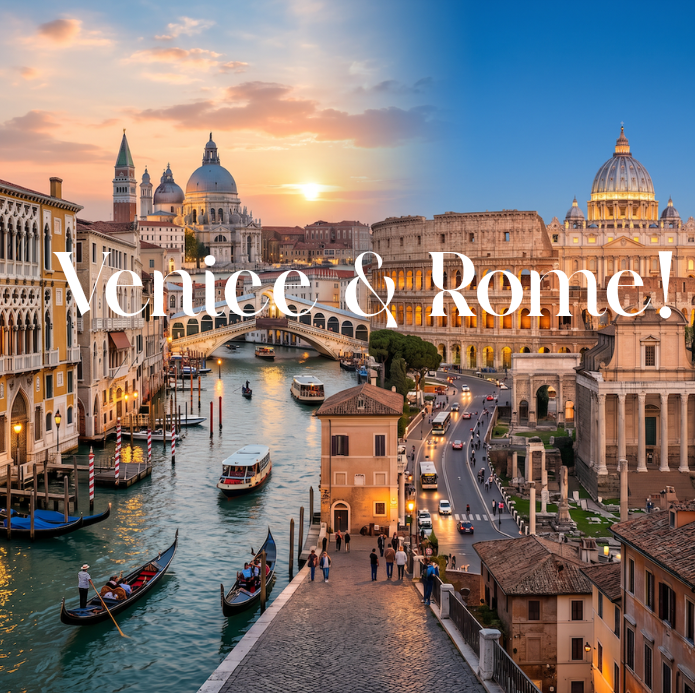
Venice, Rome, and the ten-ish days in between
This is not the full story. That's coming — in pieces, over the next few weeks, one city at a time. Consider this the trailer.
VENICE
The base
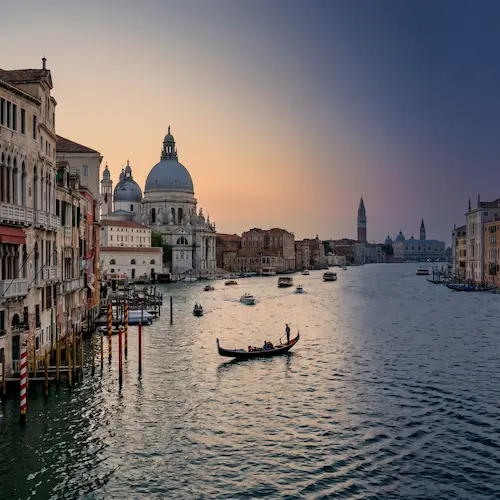
A room just around the corner from St. Mark's Square turned out to be the right call, close enough to wander over before breakfast and watch the square do its quiet-hour thing, the pigeons still asleep, the basilica catching the first proper light of the day. St. Mark's during the day is a different animal entirely — the bell tower, the crowds, the general theatre of it all — and both versions are worth having.
Lunch, correctly
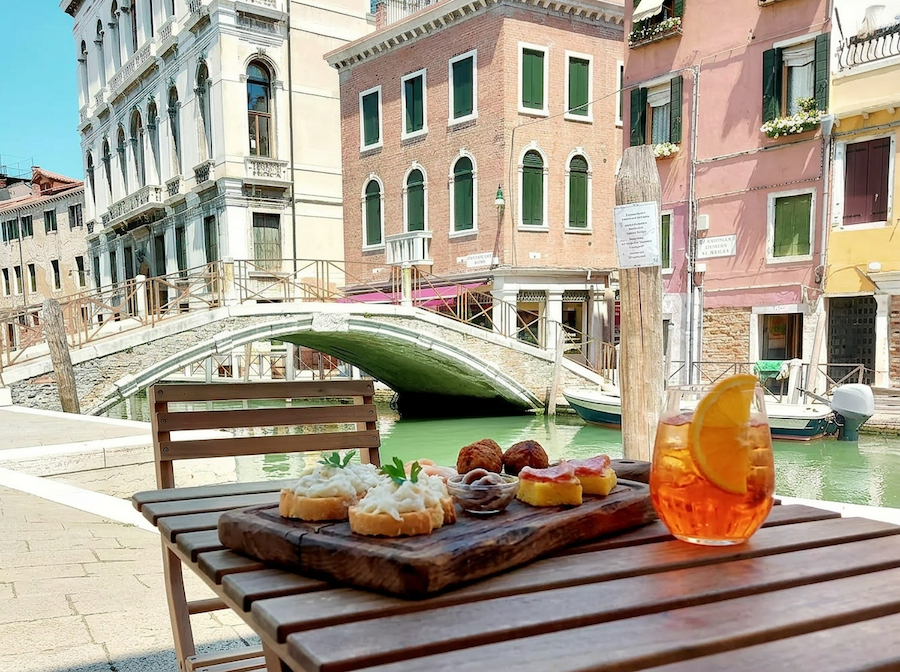
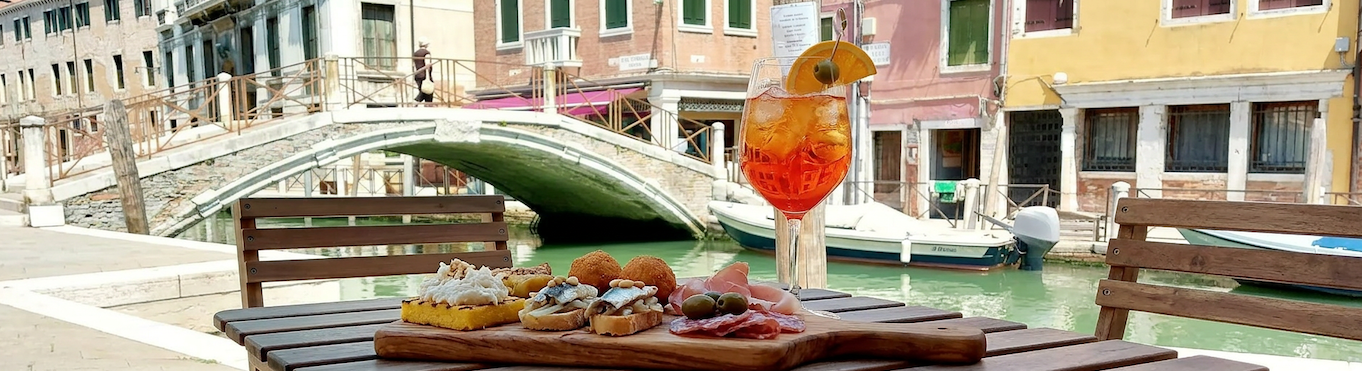
The Gritti Terrace delivered exactly what a terrace overlooking the Grand Canal should deliver — a long, unhurried lunch, the vaporetti sliding past like they're part of the menu.
Rowing, badly, then less badly
A morning was spent learning to row a batela in the Venetian style — standing, one oar, no rudder, entirely counterintuitive. Nobody went in the canal. That felt like a win worth mentioning.
Glass, Murano
An afternoon on Murano started with watching a maestro work molten glass with nothing but a blowpipe, a wet newspaper pad, and several decades of muscle memory. Then came an actual glassmaking class — hands on the tools, heat uncomfortably close, results generously described as "student work."
The one that got away
Scuola Grande di San Rocco was, on the day, closed. The Frari, next door, was very much open, and its Titians did a fair amount to soften the disappointment.
ROME
Getting there
A water taxi carried the last of the Venice leg out to the airport, which felt like the correct way to close a chapter that had opened the same way. Landing in Rome and settling into a spot just around the corner from the Trevi Fountain — coins already being thrown by people who'd been in the city all of ten minutes — made for a fairly seamless handoff from one Italian fantasy to the next.
The classics
The Colosseum and the Vatican got their due, because some sites earn the crowds honestly. Both delivered, both humbled, both were exactly as photographed and somehow still bigger in person.
The detours
Two stops that don't make every itinerary but should: the Capuchin Crypt, where the bones of some four thousand friars have been arranged into chapels of genuinely startling artistry, and the Borghese Gallery, home to Bernini marble that makes stone look like it's mid-breath and painted ceilings worth the neck strain.
The hunt
A running, faintly competitive pursuit of the perfect carbonara took up more mental real estate than the Colosseum did. Guanciale, egg, pecorino, black pepper, no cream, strong opinions at every table.
The heat
All of it — the Colosseum, the crypt, the carbonara hunt — happened inside a proper heat dome, the kind of Roman summer that rearranges a day around shade and gelato with real urgency.
What's coming
Full pieces are in the works on the Frari, the Murano glassmaking class, rowing a batela, quiet-hour St. Mark's, the Capuchin Crypt, the Borghese Gallery's ceilings, and the carbonara search in full. Ten-ish days, one city at a time.
### How many days do you need for Venice and Rome together?
Around ten days works well — three nights in Venice, the rest in Rome, with room to move slowly in both rather than racing between sights.
### Is Venice worth visiting if you don't like crowds?
Yes, with timing. Early mornings and late evenings empty the main squares out considerably; midday around St. Mark's is the trade-off for seeing it in daylight.
### What's the best time of year to visit Rome?
Late spring and early autumn are gentler than summer, when heat domes can push temperatures well past comfortable sightseeing range — worth checking the forecast and planning around shade and midday breaks if traveling in peak summer.
.webp)

.webp)
%20(2).webp)
.webp)

.webp)
.webp)


.webp)




.png)