



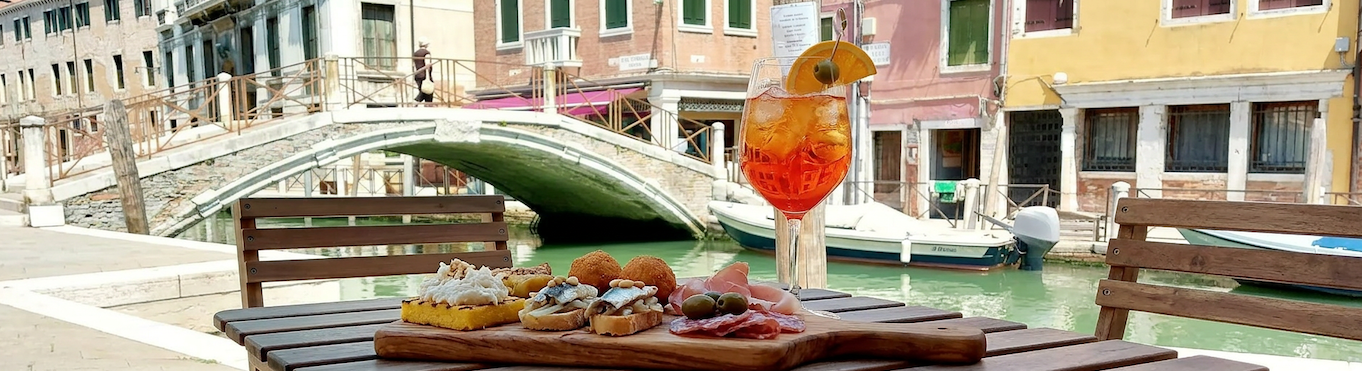
A Brief History: The Bacaro, the Cicchetto, and the Shadow
A bacaro is a small, unpretentious Venetian bar — no menu to speak of, a marble counter worn smooth by a few hundred years of elbows, and a glass case of little dishes called cicchetti (pronounced chi-KET-tee). The word cicchetto likely descends from the Latin ciccus, "a small quantity," which is either the most literal food term in Italy or a very early example of restraint marketing.
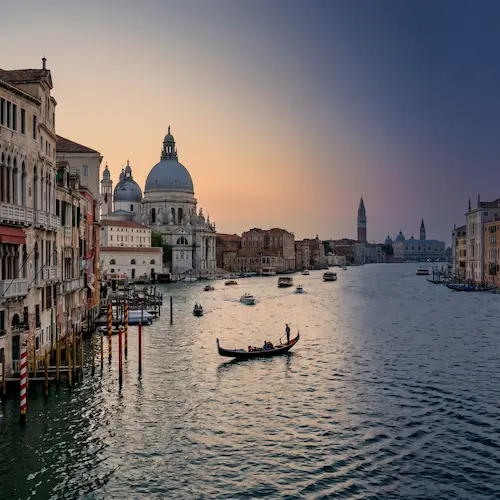
The bars themselves trace back to Venice's mercantile heyday, when dockworkers, glassmakers, and gondoliers needed something fast, cheap, and fortifying between shifts — a place to stand, eat, and keep moving. The ritual that grew up around them has a name almost too charming to be true: giro d'ombra, or "tour of the shadow." Wine sellers in the Piazza San Marco once kept their casks in the shade, moving them throughout the day to dodge the sun, and thirsty Venetians would follow the shadow of the campanile from cask to cask for a top-up. Ombra came to mean, simply, a small glass of wine — and the giro is the modern descendant of that very sensible instinct to keep moving toward whatever's cool and poured.
How It Compares: A Global Family of Small, Standing Bites
Venice is far from alone in this instinct. Cultures the world over have independently arrived at the same happy conclusion — that eating in small quantities, standing up, in convivial company, beats a formal sit-down meal most nights of the week.
- **Tapas (Spain):** The closest cultural cousin. Both traditions favour bite-sized food paired with a small drink, often taken standing at a bar. The difference is pace — tapas culture leans social and lingering, cicchetti culture leans brisk and transactional, in the friendliest possible sense.
- **Pinchos (Basque Country):** Tapas' more architectural sibling — bites skewered with a toothpick, often stacked on bread, tallied by the toothpick count at the end of the night. Cicchetti share the bread-base instinct but rarely bother with the skewer.
- **Izakaya (Japan):** A slower, seated cousin, built around shared small plates and drinking sessions that can run for hours. Where the bacaro crawl is fifteen minutes and gone, an izakaya evening is a full commitment.
- **Bar bites (everywhere else):** The loosest comparison — peanuts, olives, the odd charcuterie board. Cicchetti do the same job of anchoring a drink but treat the food as the entire point, not an afterthought to it.
#The Top Five Cicchetti to Order
1. **Baccalà mantecato** — whipped salt cod, pale and impossibly light, usually served on a slice of grilled polenta or crostino. The signature dish of the genre.
2. **Sarde in saor** — sweet-and-sour sardines marinated with onions, pine nuts, and raisins, a recipe sailors once used to preserve fish for long voyages.
3. **Folpetti** — tender baby octopus, simply dressed with olive oil and parsley, sometimes with a few slices of potato underneath.
4. **Polpette** — small fried meatballs, usually beef or a mix, crisp outside and soft within, the closest thing to a guaranteed crowd-pleaser.
5. **Crostini assortiti** — the open category, really: toasted bread piled with anything from gorgonzola and anchovy to prosciutto and stracchino, endlessly variable and the natural home for a bit of kitchen improvisation.
**What to drink alongside:** An ombra of house white is the traditional pour, but a glass of Prosecco or a properly bitter Spritz such as an Aperol Spritz,both do the job. For something more serious, a glass of Soave or a Ribolla Gialla stands up well to the richer cicchetti — the mantecato in particular wants something with a bit of minerality to cut through the fat.
Five Bacari Worth the Walk
A proper giro d'ombra covers real ground, sestiere to sestiere. These five make a satisfying route, running from the hush of Cannaregio down toward the Frari and on into Dorsoduro.
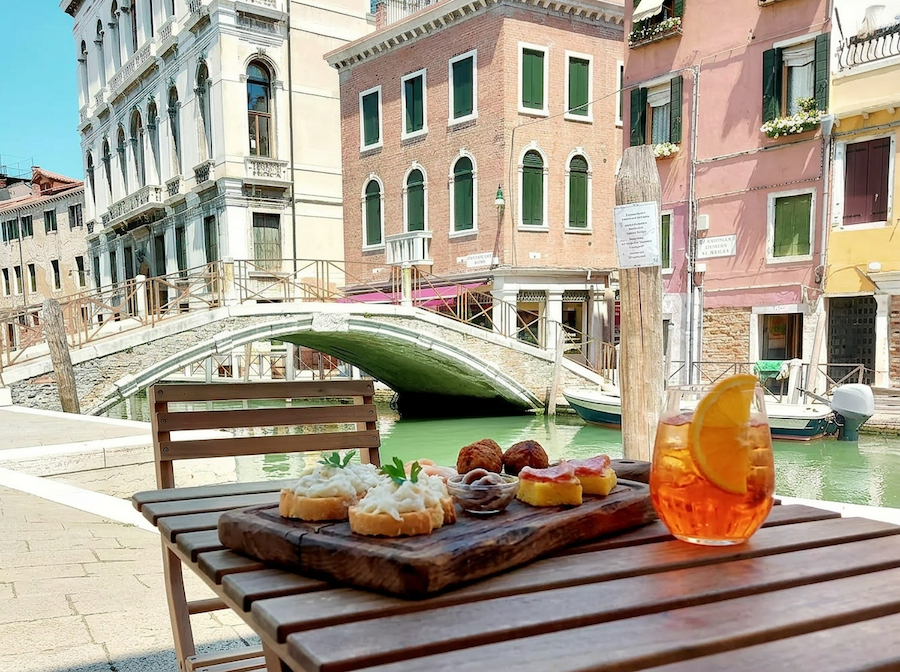
**Osteria Santa Fosca**, tucked into the Jewish Ghetto in Cannaregio, is the detour worth making. It sits on a quiet, residential fondamenta beside its own canal — a genuine street-away from the postcard version of Venice, which is precisely the point. Order a sample plate as we did and take the outdoor table by the water.
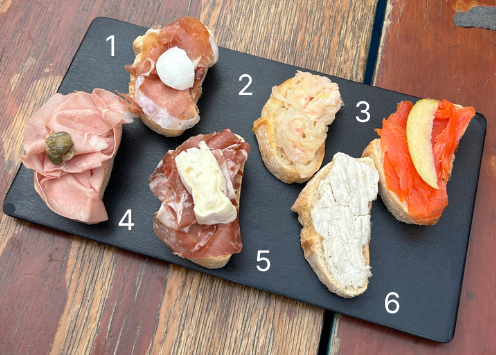
**Bar L'Archivio**, opposite the Frari across a small bridge, splits its time between bacaro and bakery — arrive for cicchetti, notice the pistachio croissants, leave having ordered one anyway.
**Bar All'Arco**, near the Rialto market, is cicchetti at its most concentrated: standing-room-only, a rotating case of toppings, and a queue that tells you everything about how good the gorgonzola-and-anchovy really is.
**Cantina Do Mori**, Venice's oldest bacaro, has been pouring wine since the 1400s — ask them to choose and let history do the deciding.
**Osteria al Squero**, in Dorsoduro, sits directly across from a working gondola workshop. No seats, no ceremony, just good wine and a view most restaurants would kill for.
Bringing Giro d'Ombra Home
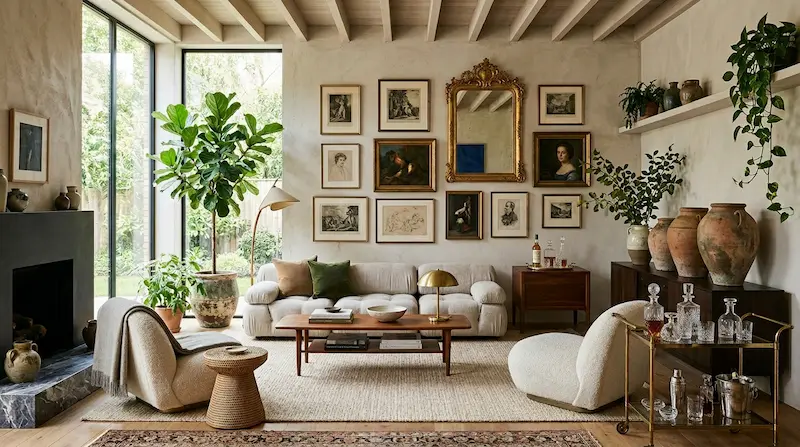
The whole appeal of cicchetti hour translates beautifully to a home cocktail hour, and it asks for almost nothing in the way of equipment. Set out a board of crostini rather than a single large dish — the point is variety, not abundance. Keep drinks small and easy to refill, Prosecco or a Spritz over anything that needs mixing at length. And resist the urge to seat everyone; half the charm of a giro is that people drift, plates in hand, conversation moving with them.
Recipe: Crostini with Mortadella, Burrata and Pistachio
A cicchetto built for a home cocktail hour — rich, a little sweet, a little salty, and ready in the time it takes to toast the bread.
**Makes 12 crostini**
- 1 baguette or ciabatta, sliced into 12 rounds and lightly toasted
- Olive oil, for brushing
- 12 thin slices mortadella
- 1 ball burrata, torn
- ¼ cup shelled pistachios, roughly chopped
- Honey, for drizzling
- Flaky sea salt and cracked black pepper
Brush the toasted bread lightly with olive oil. Drape a slice of mortadella over each one, letting it fold naturally rather than lying flat — a little height serves the dish well. Spoon torn burrata over the top so it spills slightly over the edges. Scatter with chopped pistachio, finish with a thin drizzle of honey, and close with a pinch of flaky salt and a crack of black pepper. Serve immediately, while the bread still has its crunch.
What does "cicchetti" actually mean?
It comes from the Latin word for "a small quantity" — a fitting name for Venice's tradition of small bar bites, served standing at a bacaro counter.
What is a giro d'ombra?
Literally a "tour of the shadow" — the Venetian custom of moving from bacaro to bacaro over small glasses of wine, named for wine sellers who once followed the shade of the campanile through the day.
How is a bacaro different from a regular Italian bar?
A bacaro is smaller, older in feel, and built specifically around cicchetti and wine by the glass rather than a full food or cocktail menu.
What's the best drink to pair with cicchetti?
An ombra of house white wine is traditional, though a n Aperol Spritz or Prosecco both work well, and a glass of Soave suits the richer dishes like baccalà mantecato.
Can cicchetti culture translate to entertaining at home?
Easily — small crostini, easy-to-refill drinks, and a standing, drifting crowd capture the spirit better than any formal seated spread.

.webp)

.webp)
%20(2).webp)
.webp)

.webp)
.webp)

.webp)




.png)