



An Island That Has Been Burning for Eight Centuries

The story of Murano glass begins not with beauty, but with fear. In 1291, the Venetian Republic ordered every glassmaker in Venice to relocate to the island of Murano, roughly a mile north of the main city. The official reason was fire safety — the furnaces were a genuine risk to Venice's famously timber-heavy construction. But there was a second, equally pressing motive: control. The Republic understood that glassmaking was an extraordinary economic asset, and keeping the craftsmen on an island made it considerably harder for trade secrets to walk out the door. Glassmakers were forbidden from leaving under penalty of death. The knowledge stayed on the island.
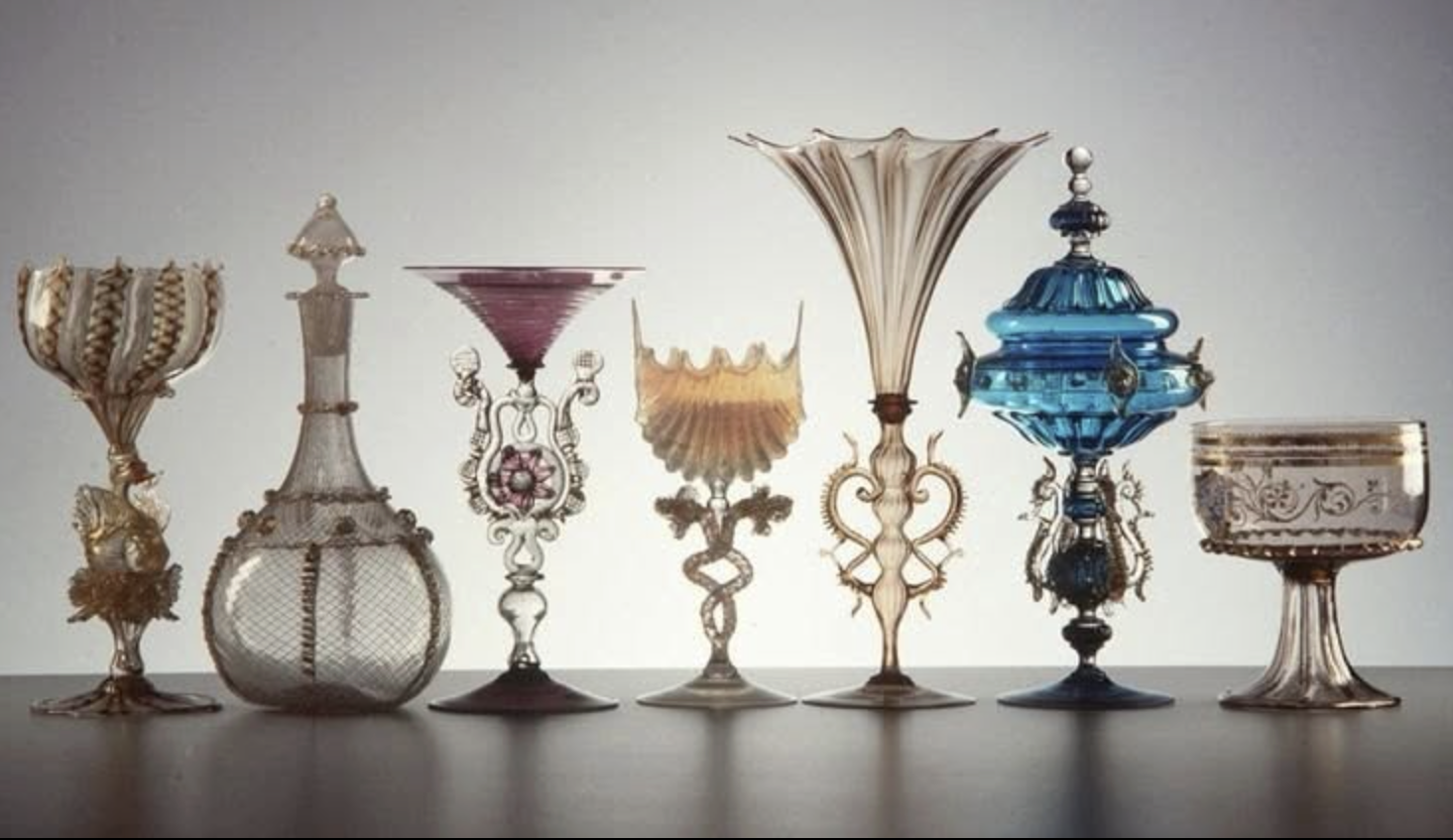
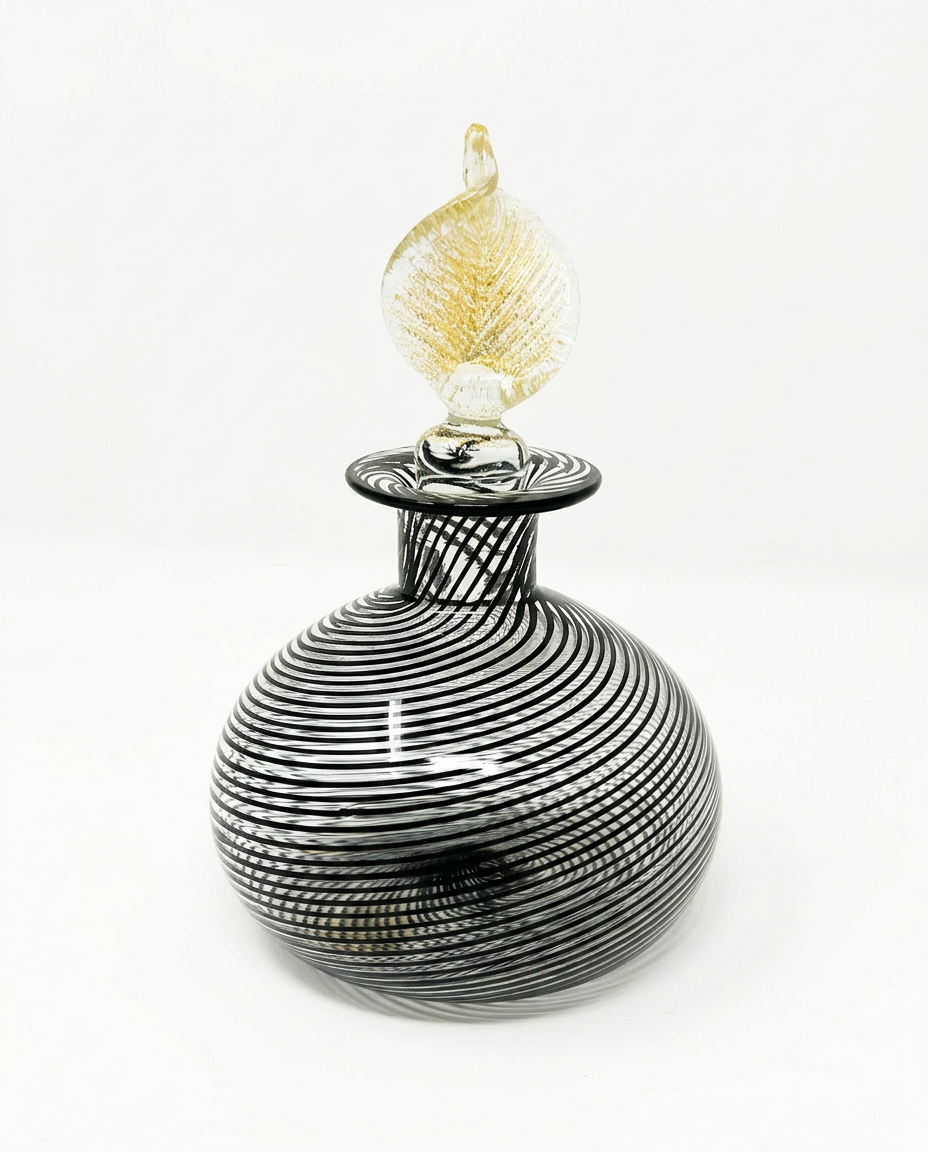
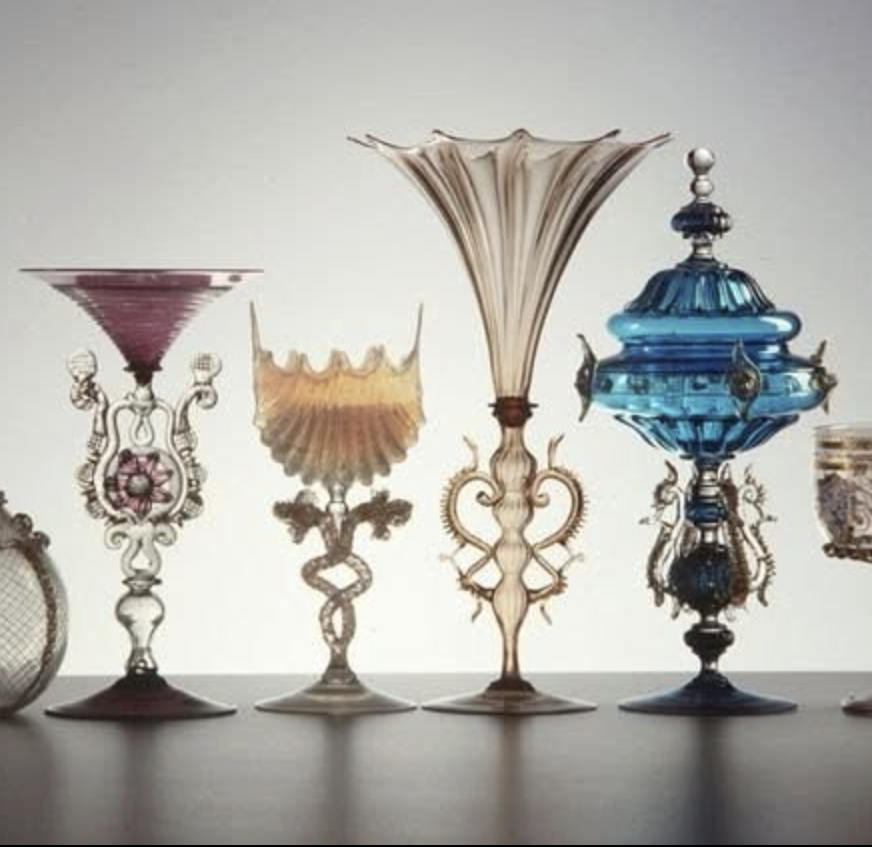
What grew from that enforced isolation was one of the most sophisticated craft traditions in human history. Murano glassmakers invented cristallo — a nearly colorless, exceptionally pure glass — in the fifteenth century. They pioneered filigrana, the technique of twisting fine threads of colored or opaque white glass into intricate patterns within a clear matrix. They invented mirrors of a quality that made the rest of Europe's attempts look like puddles. For three hundred years, Murano had a monopoly on fine European glass, and the island's maestros were treated as royalty — literally. They were permitted to wear swords, to marry into Venetian nobility, and to enjoy privileges unavailable to almost any other artisan class on the continent.
The Vaporetto Ride Over
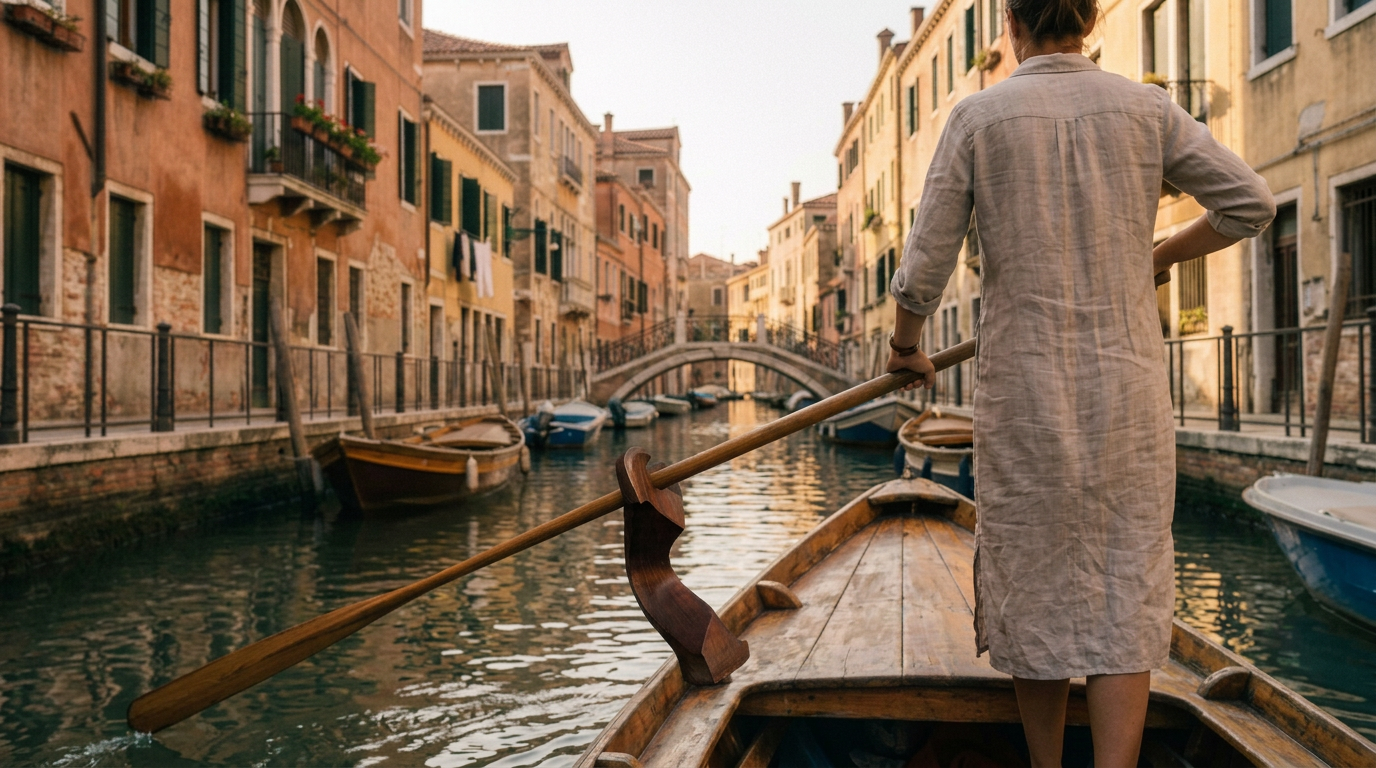
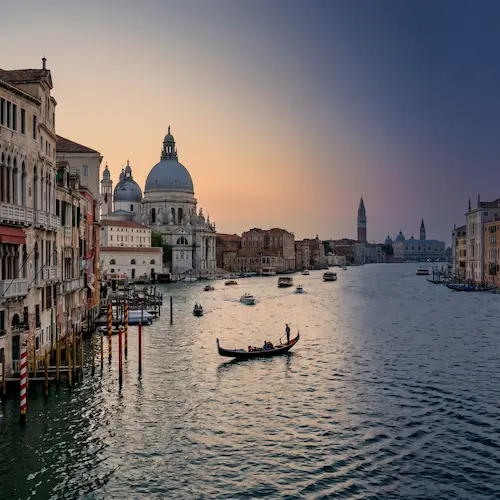
We boarded the vaporetto at Fondamente Nove when Venice was caught in a heat dome — one of those Mediterranean summer events where the air feels borrowed from somewhere closer to the equator — and the boat's open deck offered only the mild mercy of movement. The crossing to Murano takes about twelve minutes, which is just long enough to watch the city shrink behind you and the island's low skyline of chimneys and campaniles come slowly into focus ahead.
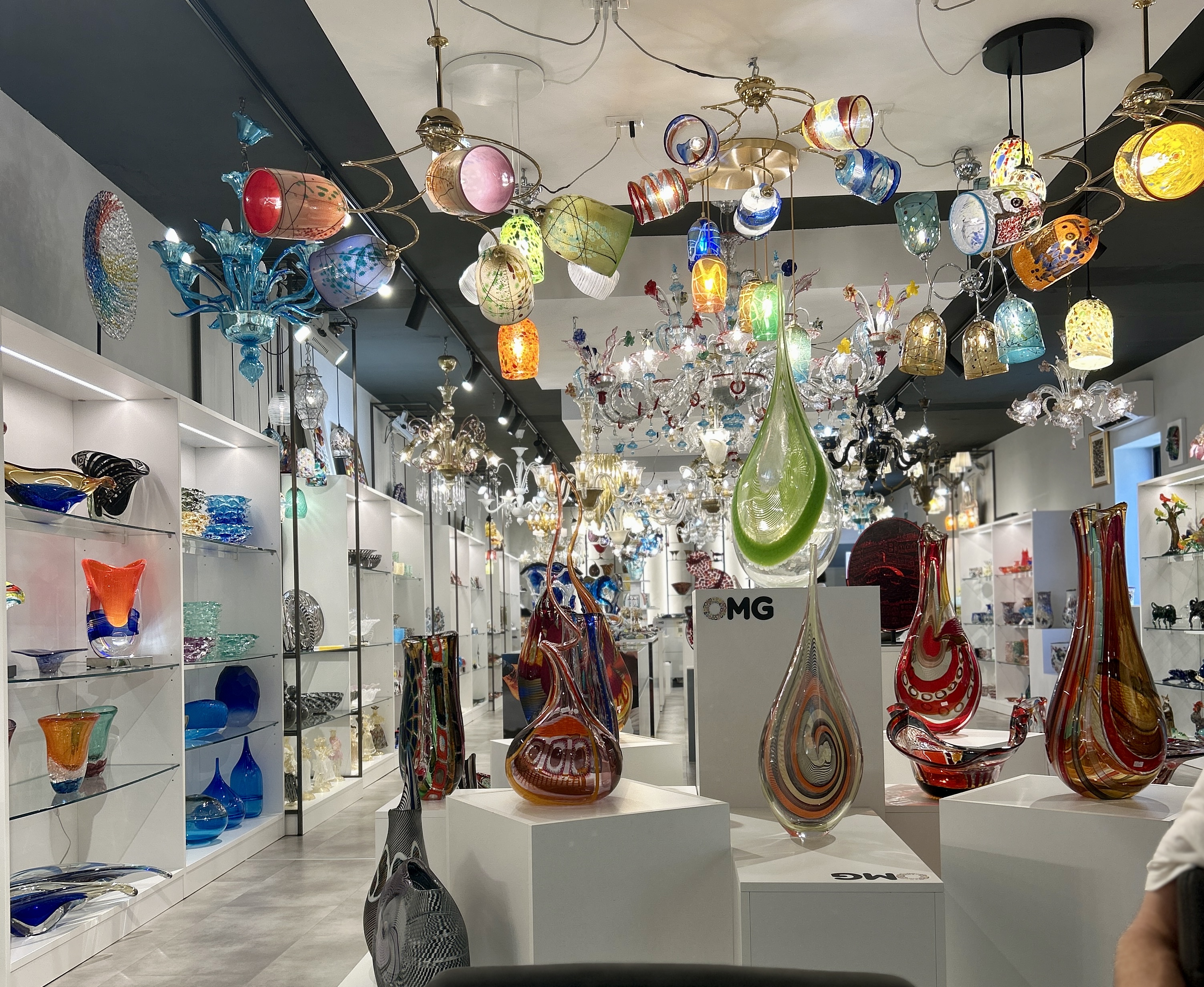
Murano has its own Grand Canal, its own churches, its own unhurried pace. It is quieter than Venice, less theatrical about its beauty. The glass showrooms line the fondamenta, their windows a kind of ongoing argument about color and form — chandeliers like coral reefs, vases in shades of amber and peacock blue, small horses and large abstract sculptures that seem to be in conversation with Calder and Chihuly simultaneously. We could have spent the morning just looking. But we were there to go deeper.
Watching the Maestros Work
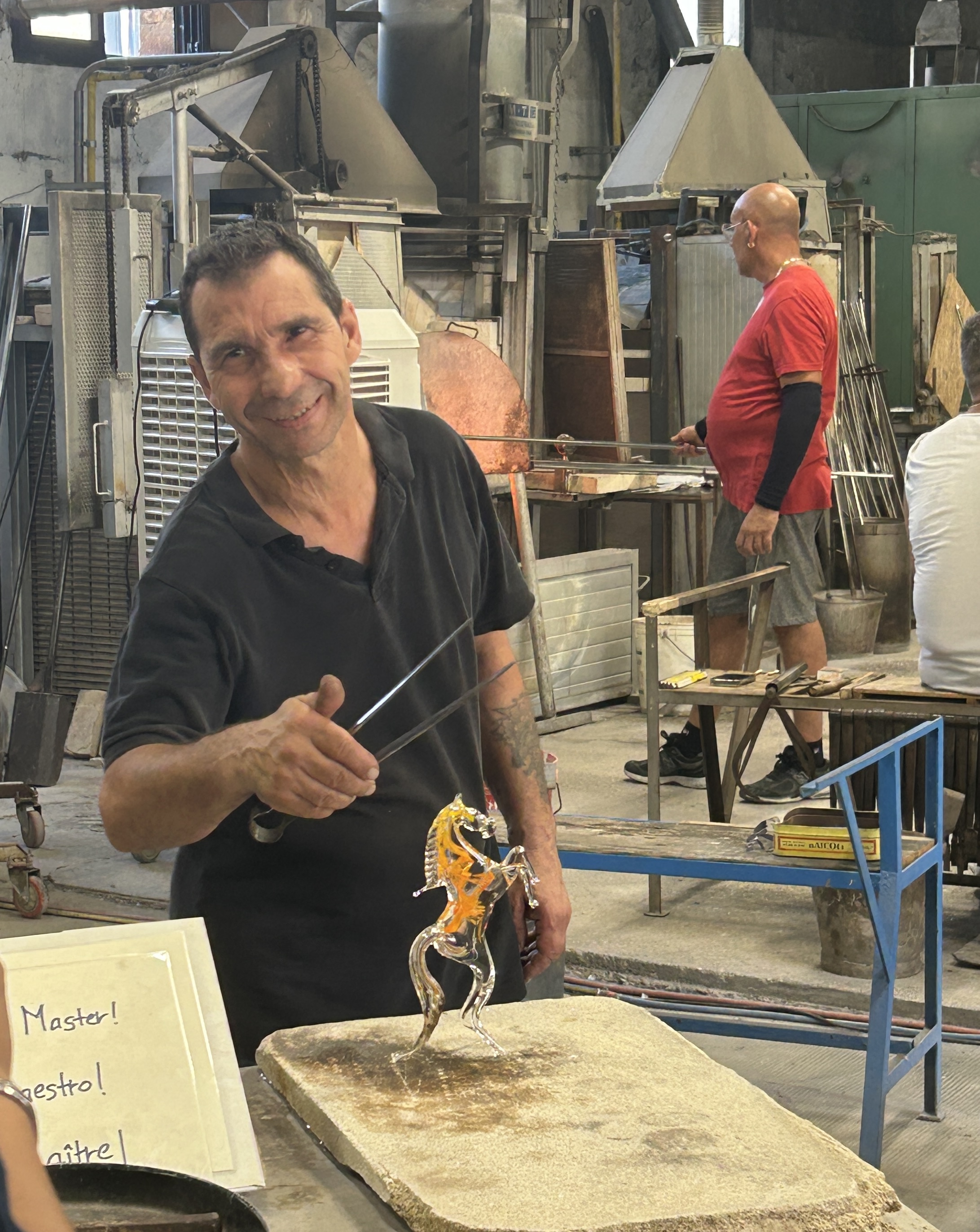
The demonstration hall was not, it should be said, a cool place to spend time in August. The furnaces — three of them, each running at temperatures between 1,900 and 2,100 degrees Fahrenheit — radiated a heat that pressed against the skin like something physical. And yet the maestros moved through it with the kind of unhurried economy that only comes from decades of practice. No wasted motion. No hesitation. Just an absolute fluency with a material that most of us would find genuinely terrifying.
Watching a master glassblower work is one of those rare experiences where craft tips over into something closer to performance. The gather — the molten glass collected at the end of the blowpipe — glows a deep, almost nuclear orange. With a long, sustained breath, it begins to expand. The maestro rotates constantly, because gravity is always working against him; stop turning and the glass sags. He shapes with wooden blocks, with wet newspaper folded into pads, with a marver — a flat steel table used for rolling and cooling — and with a collection of iron tools worn smooth by generations of hands before his.
The Journey to Becoming a Maestro
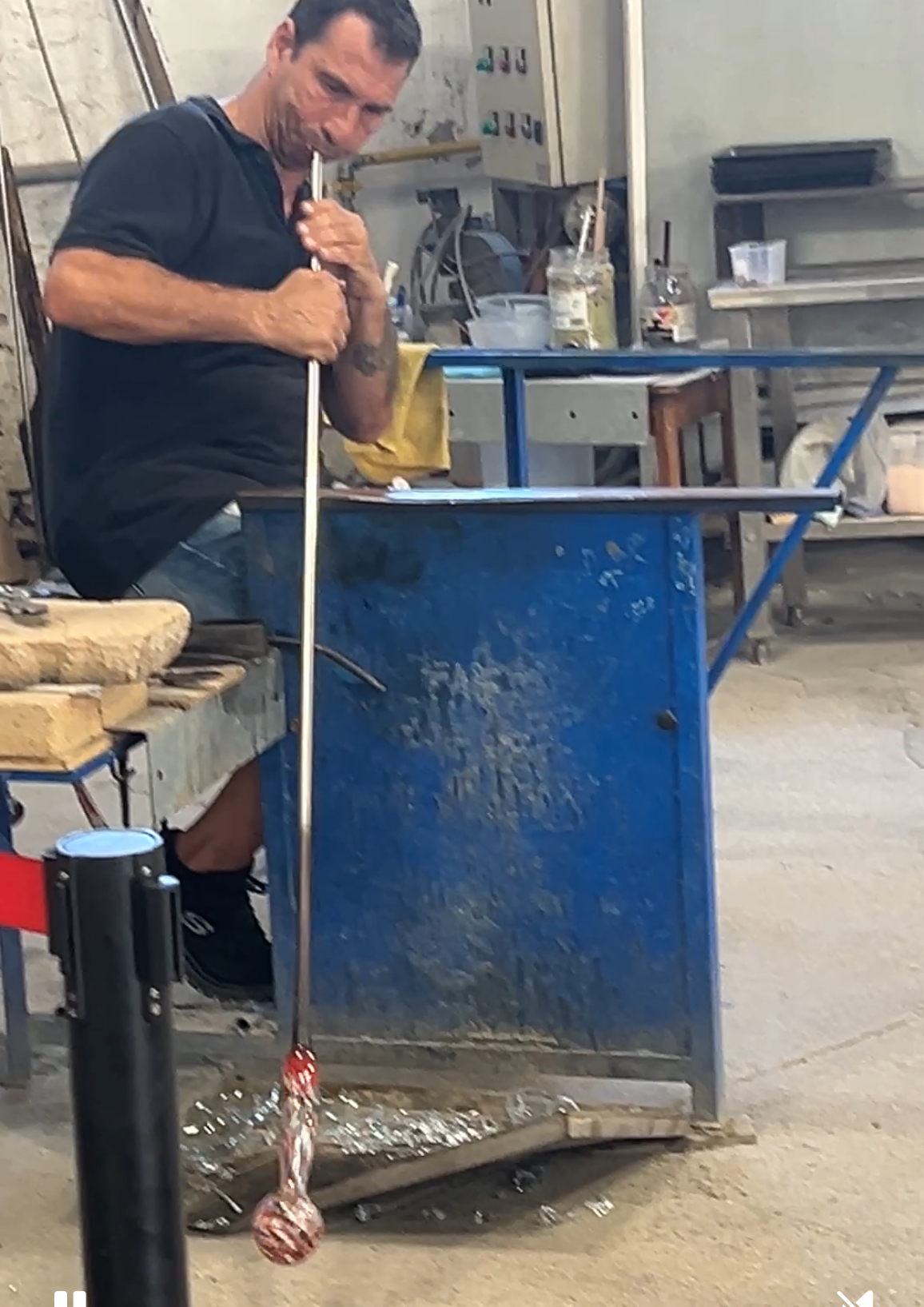
On Murano, mastery isn't rushed. It begins around the age of fourteen or fifteen, when a young apprentice—known as a Garzon—enters the furnace not to create, but to observe. The early years are spent sweeping floors, carrying tools, organizing materials, tending the fire, and learning that every seemingly ordinary task serves a greater purpose. Glass, after all, has little patience for shortcuts.
A decade later, the apprentice earns the title of Servente, or journeyman, and finally takes their place beside the Maestro, assisting in the delicate choreography that transforms molten glass into works of art. Only after fifteen to twenty years of unwavering dedication can an artisan hope to be called a Maestro. By then, they have mastered far more than technique. They have developed an instinct for timing, an eye for beauty, and the quiet confidence to turn centuries of tradition into something entirely their own.
Our Turn at the Furnace
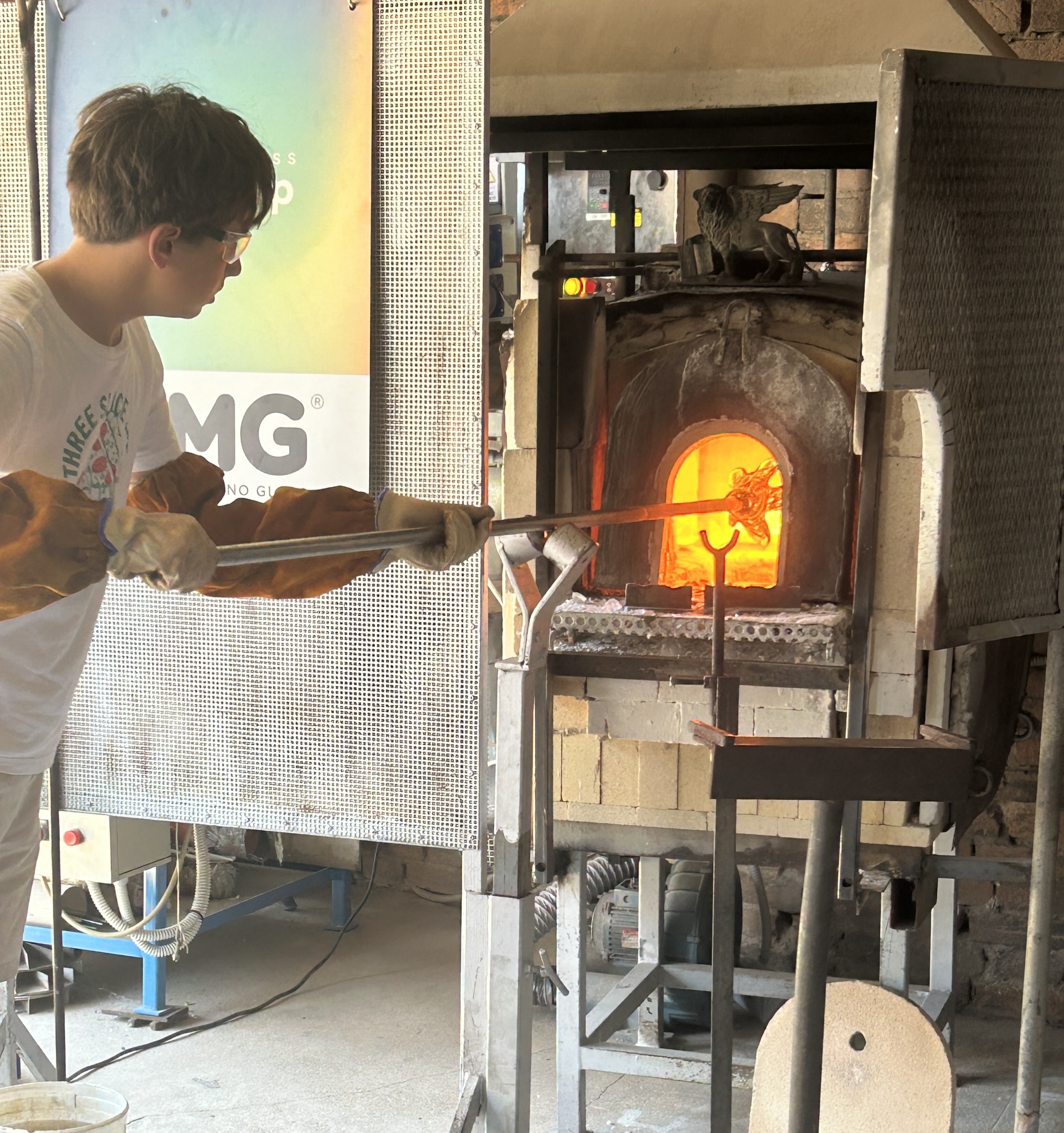
The private lesson happened in a smaller workshop, the pace slower, and the instructors — who had clearly taught many nervous beginners — were meticulous about safety before anything else.
We learned the tools first. The pontello, or punty rod, used to hold the glass once it's been transferred from the blowpipe. The borsella — tongs that open and close with a satisfying precision, used for pulling and shaping. The wooden blocks for cupping and smoothing. Some of these tools, we were told, were themselves decades old, their handles darkened and shaped by years of use. There is something grounding about working with an instrument that has passed through many hands before yours.
The plan was to make a glass flower. We gathered the molten glass at the end of the pole — heavier than expected, and in constant, slow motion — and rolled it across a steel tray scattered with chips of colored glass. The chips adhered to the surface and would melt in during the next pass through the furnace. Back into the heat it went, and when it came out again, glowing and soft, we sat on the glassmaker's bench. The bench has two long arms extending from each side, and the rod rests across them; by rolling it with your palms, you keep the gather turning, keep it symmetrical, keep gravity at bay.
The borsella came next. Working from the end of the gather, the instructors guided our hands — gently, but with clear authority — as we pressed five evenly spaced indentations around the circumference to mark the petals. Then the tongs to pull each petal outward, coaxing the glass into shape. Here is the thing nobody tells you: the window is astonishingly small. The glass goes from workable to rigid in seconds, and if you hesitate, or second-guess yourself, the moment is simply gone. There is no undo.
We did not make flowers. One of us made something that might charitably be described as a starfish. The other produced a solid, satisfying lump that can be called "a beautiful doorstop." Both pieces now sit on a shelf at home. We are extraordinarily fond of them.
What You Take Home Beyond the Glass
There is a reason we believe that trying to make something is the most direct route to understanding it. Reading about glassblowing gives you information. Watching a maestro gives you admiration. Picking up the rod yourself — feeling the weight, the heat, the terrifying speed of the cooling — gives you comprehension at a level that no amount of looking can quite reach.
The sculptures we had admired in the showroom windows looked different on the walk back to the vaporetto. Not just beautiful, but legible. We could see the decisions in them, the split-second choices, the accumulated years of practice required to make a piece that complex look that inevitable. If you are going to learn what Murano glass truly is, learn it from the source. From the island that has been doing this, under guard and under fire, for eight hundred years.
Our doorstop and our starfish are, objectively, disasters. They are also among the most honest objects we own.
Do you need any experience to take a glassblowing lesson in Murano?
No prior experience is necessary. Most workshops in Murano are designed specifically for beginners and include full safety instruction before you touch any tools. The instructors are practiced at guiding first-timers, though be warned — the gap between watching and doing is considerable, and humbling in the best possible way.
How long does a private glassblowing lesson typically last?
A private or small-group lesson generally runs between one and two hours, depending on the workshop and what you're making. That time includes a safety briefing, tool introduction, your demonstration piece, and the hands-on session. The furnace does most of the clock-watching for you — the pace is dictated by the glass, not the schedule.
Can you take your finished piece home with you?
Usually not immediately. The glass needs to cool slowly in a controlled annealing oven — a process that can take several hours — to prevent it from cracking. Most workshops will package your piece and have it ready for collection later that day, or can arrange to ship it directly to your home address.
What is the best time of year to visit Murano?
Spring and early autumn are ideal. April through June and September through October offer pleasant temperatures, manageable crowds, and the full range of workshops running normally. Summer visits are entirely worthwhile but come prepared — between the Venetian heat and the furnaces, it is genuinely warm work, and dressing in light, natural fabrics is strongly advised.
How do you get to Murano from Venice?
The most scenic and practical option is the vaporetto — the public water bus — from Fondamente Nove on Venice's northern waterfront. Lines 4.1 and 4.2 serve Murano regularly, and the crossing takes roughly twelve minutes. Water taxis are faster and considerably more expensive, but worth considering if you're traveling with fragile luggage or a strict schedule.
Is Murano glass still made by hand using traditional methods?
Yes — and this is precisely what distinguishes authentic Murano glass from the imitations widely sold throughout Venice. Look for pieces bearing the Vetro Artistico® Murano trademark, which guarantees the work was made on the island using traditional techniques. Many of the foundational methods — filigrana, sommerso layering, the use of ancient tools — have changed very little in centuries.







.webp)

.webp)
%20(2).webp)
.webp)


.png)