



The Bacaro Mindset: Intimate Over Impressive
A bacaro is not a restaurant. It's barely even a bar in the conventional sense. In Venice, the word describes something closer to a neighborhood ritual — a place where the aperitivo hour bleeds gently into evening, where cicchetti arrive on small plates without ceremony, and where the wine list is short because nobody's here to overthink it. When you translate that to your own home, the first thing to abandon is the impulse to impress. This is about warmth, not performance.
That shift in intention changes everything about how you set up a space. You're not laying a formal dinner table. You're creating a landing place — somewhere guests can drift toward, graze, refill their glass, and stay longer than they meant to. A generous grazing surface and a well-appointed cocktail station nearby will do more for the atmosphere than any centerpiece ever could.
The Grazing Table: Abundance Without Fuss
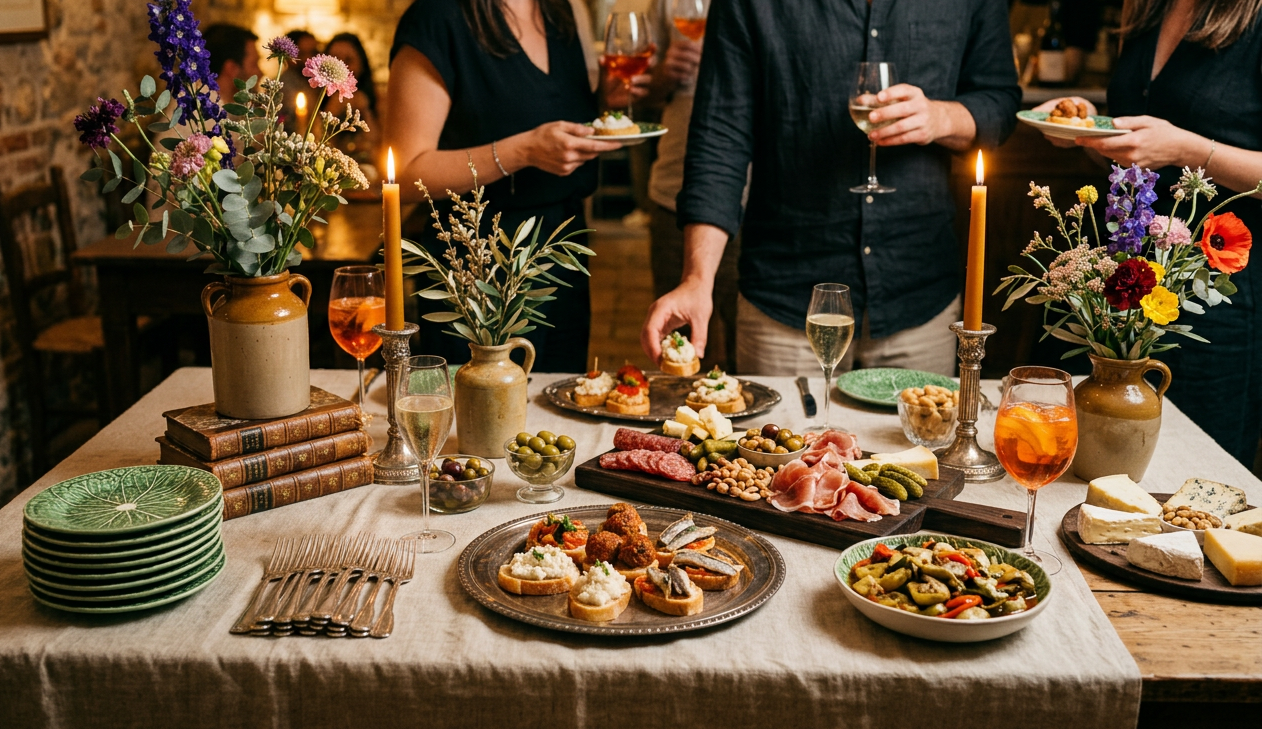
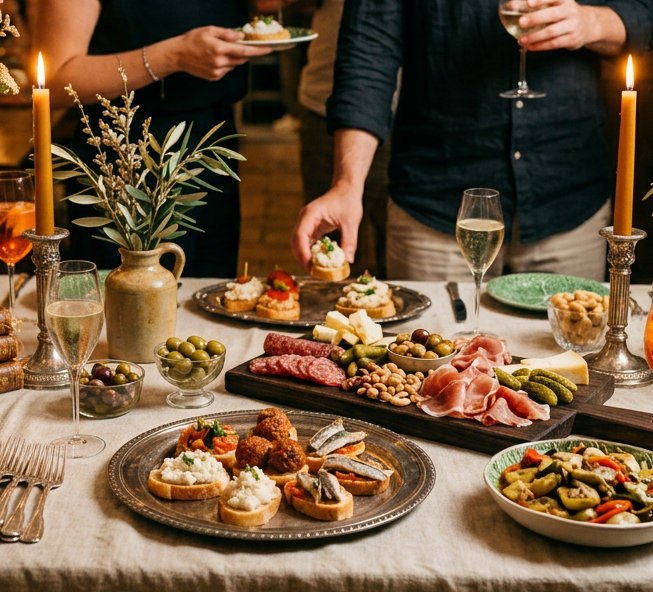
Think of your table as a still life — one that happens to be edible. The Venetian approach to food presentation has always been tactile and layered: mismatched dishes piled with things that look beautiful before you even taste them. Resist the urge to organize it too neatly. A little controlled chaos is the point.
Start with texture at the base. A length of aged linen, slightly rumpled rather than pressed flat, sets an immediate tone. Lay a worn wooden board or two across the surface for the weightier items — a wedge of aged Asiago, a torn half of a rustic loaf, a small bowl of marinated olives glistening with oil. Don't crowd everything onto one level; use a low stack of antique books, an overturned terracotta pot, or a small wooden crate to lift certain elements. The variation in height gives the eye somewhere to travel.
For serving pieces, this is where antique silver earns its keep. A tarnished silver tray doesn't need polishing — that patina is doing exactly what you want it to do. Use it to hold a cluster of small bites: bruschetta topped with baccalà mantecato, crostini with a smear of chicken liver and a caper, thin-sliced mortadella folded loosely into rosettes. Small cabbage-form majolica plates — the kind in soft sage and cream — are perfect for individual servings and look like they came directly from a Venetian kitchen rather than a table styling session. Which is precisely the goal.
Flowers That Feel Found, Not Arranged
The Gritti Palace terrace — that legendary stone ledge above the Grand Canal — has always leaned into a certain studied imperfection when it comes to botanicals. Trailing vines, urns of something slightly overgrown, flowers that look plucked from a garden wall rather than ordered from a florist. Follow that instinct.
Wild or garden-style blooms work best here: ranunculus, dahlias in deep terracotta and rust, branches of something structural like olive or eucalyptus. Avoid symmetry. A single tall, slightly imperfect stem in a narrow-necked antique glass bottle can be more arresting than a formal arrangement three times its size. Collect vessels in varying heights — green glass, old ceramic, even a small terracotta jug — and group them loosely at one end of the table rather than spacing them evenly. It reads as collected rather than coordinated. That's the distinction.
Glassware: The One Place to Spend the Money
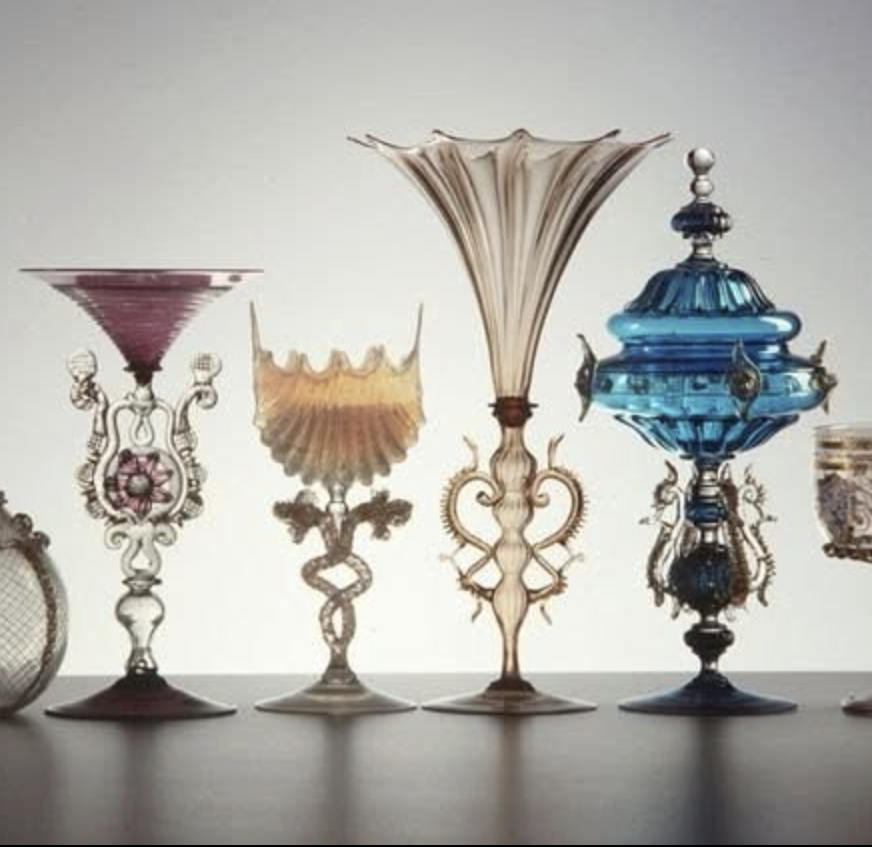
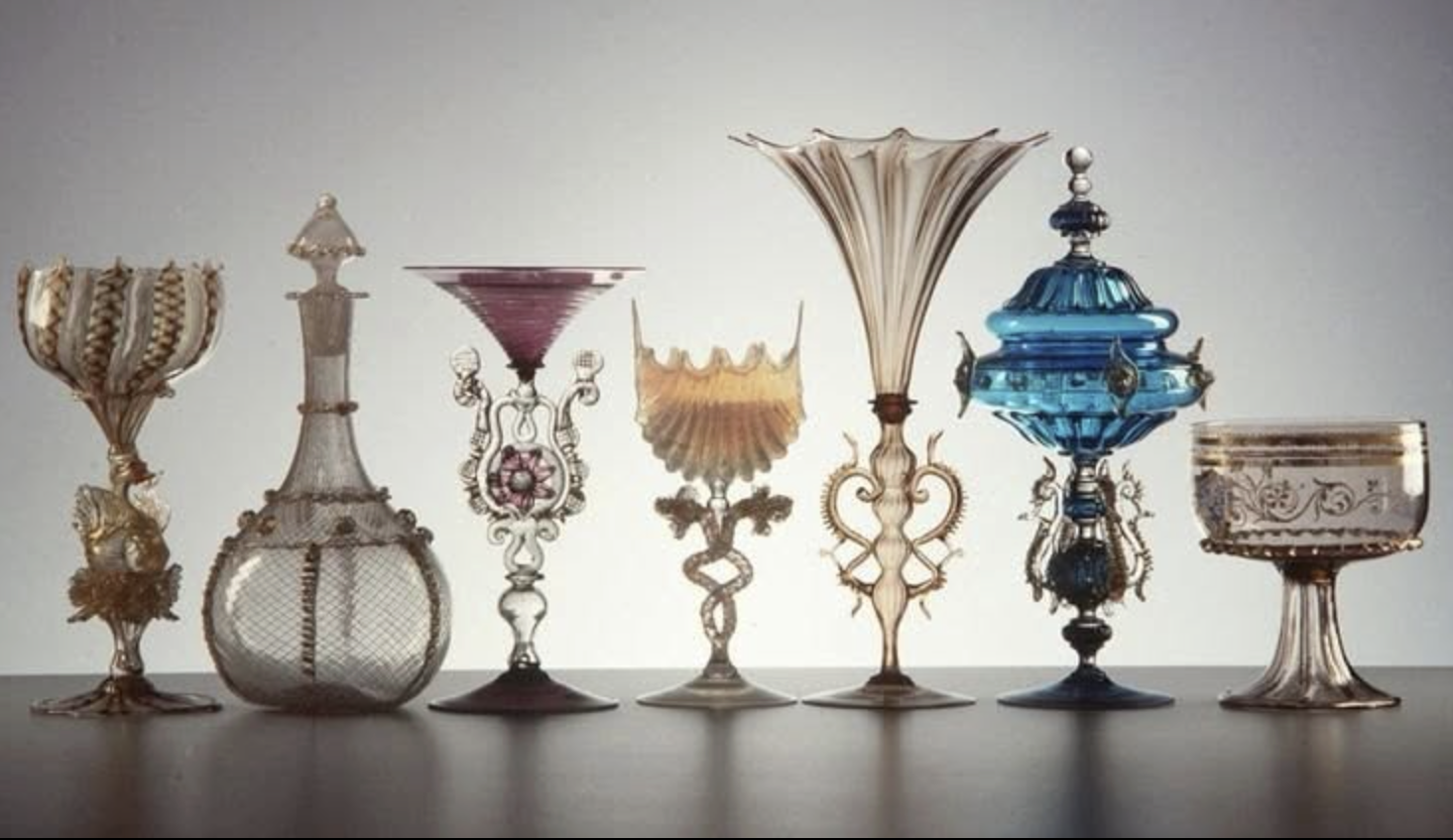
The glassware on a Venetian-inspired table carries disproportionate weight. A set of Murano glass champagne coupes — those wide, shallow bowls in amber, smoky topaz, or the palest blush — transforms the simplest spritz into something worth lingering over. For still wine and water, low tumblers in heavy clear or slightly tinted glass feel appropriately old-world. The combination of both on the table creates an effortless layering that no amount of linen or florals can replicate.
If you're sourcing Murano pieces, look for coupes and tumblers from small Venetian glassmakers rather than mass-produced interpretations. The slight irregularity in the form — a tiny bubble in the glass, a rim that isn't perfectly level — is not a flaw. It's provenance. Set them out without matching them too precisely; four coupes that are nearly identical but not quite feel far more interesting than a perfectly uniform set.
The Cocktail Cart: Your Bacaro Counter Stand-In
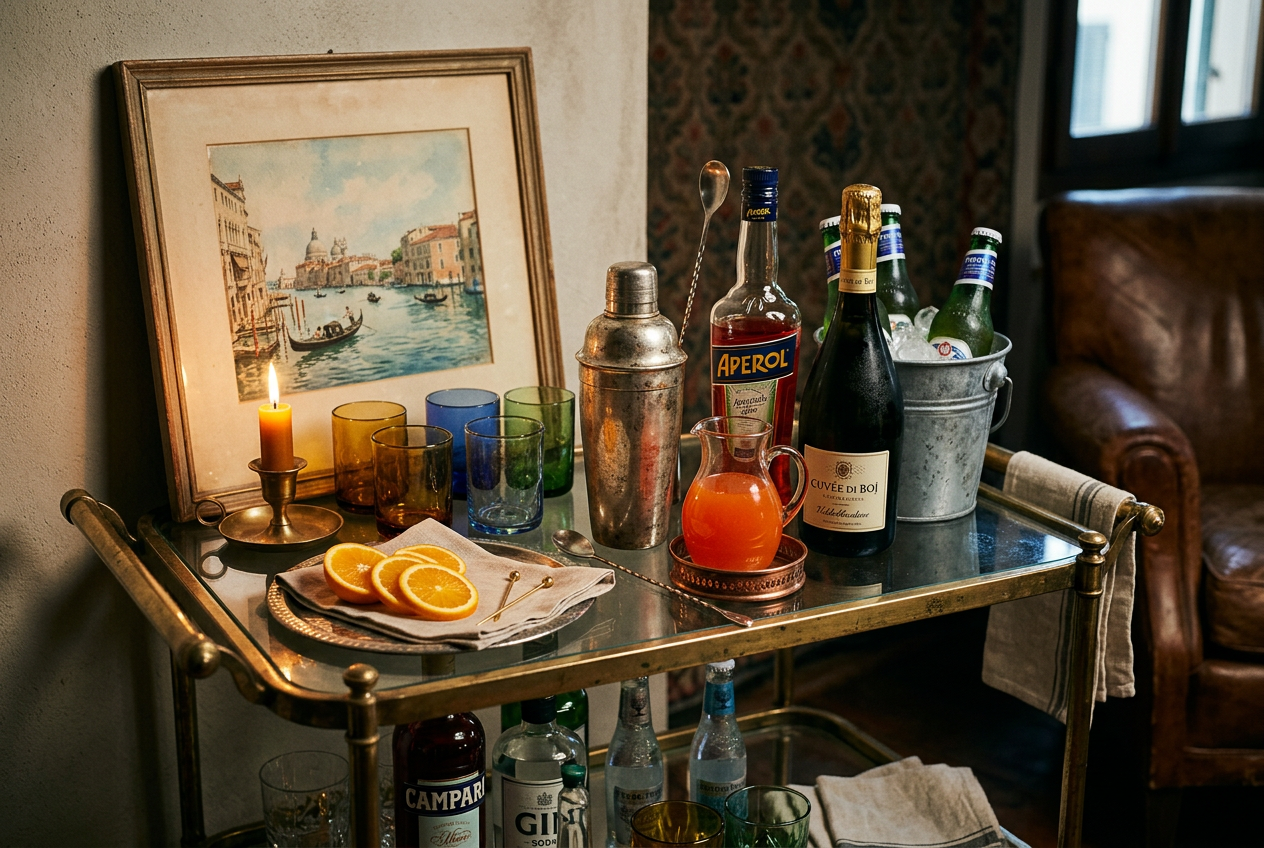
In a real bacaro, the counter is everything. It's where the action happens, where the host makes eye contact, where you order another ombre without having to ask twice. At home, a cocktail cart or a dedicated side table plays the same role — a station of intent that signals to your guests: this is where the evening lives.
Keep it curated but generous. A vintage cocktail shaker — ideally silver or chrome, with some age to it — is both functional and beautiful. Add a long bar spoon, a small glass jug for pre-batching spritzes, and a brass or copper wine coaster. Aperol, a bottle of good Prosecco, and a few chilled Peronis in a small galvanized ice bucket cover the full range of what your guests will actually want. Set out a small tray of sliced orange rounds for garnish, a cluster of Murano tumblers, and perhaps one low-burning candle to anchor it without overwhelming the spread.
The cart should look inhabited, not staged. A small piece of Venetian art leaned against the wall behind it — a postcard-sized print of a canal view, a page torn from an old architecture book — adds depth without demanding attention. The goal is the sense that these objects have always lived here together, that you didn't spend the afternoon arranging them. Even if you did.
Light: The Element Everyone Underestimates
Venetian interiors are famously golden. The light that bounces off the lagoon, filters through old glass windows, and catches the gilded surfaces of Gothic architecture creates a warmth that no overhead fixture can replicate. At home, the translation is simple: go low, go warm, go multiple sources.
Cluster a group of mismatched candlesticks at varying heights — silver, brass, ceramic — across the table and cart. Add one or two amber-glass hurricane lanterns if you have them. If you're working with overhead lighting, dim it as far as it will go and let the candles carry the room. The difference between a well-lit table and a candlelit one is the difference between a dinner party and an evening. One ends at ten. The other doesn't.
The Aesthetic Through-Line: Collected, Not Curated
What makes Venice's visual identity so enduring — and so difficult to fake — is that nothing there was designed for Instagram. The Byzantine mosaics, the crumbling frescoes, the mismatched chairs on a narrow calle, the handblown glass that's been made the same way for six centuries — it all exists because it was made well and kept. Your table should carry the same quiet confidence. Choose pieces you actually love. Allow the worn silver tray, the slightly chipped majolica plate, the vintage shaker with a dent in the base. Imperfection is not a compromise. In this context, it's the whole point.
Part two of this series will move into the food itself — the cicchetti that belong on those beautiful plates, the wines worth pouring into those coupes, and the rhythm of a bacaro evening that makes guests forget they ever had somewhere else to be.
What is a bacaro and how does it differ from a regular bar?
A bacaro is a distinctly Venetian institution — a small, informal wine bar that serves cicchetti, the city's version of tapas or bar snacks. Unlike a typical bar or restaurant, a bacaro is built around conviviality and simplicity: short wine lists, counter service, and an atmosphere that prioritizes lingering over efficiency. The experience is intimate, unhurried, and deeply local.
What are cicchetti and how should they be served at a home gathering?
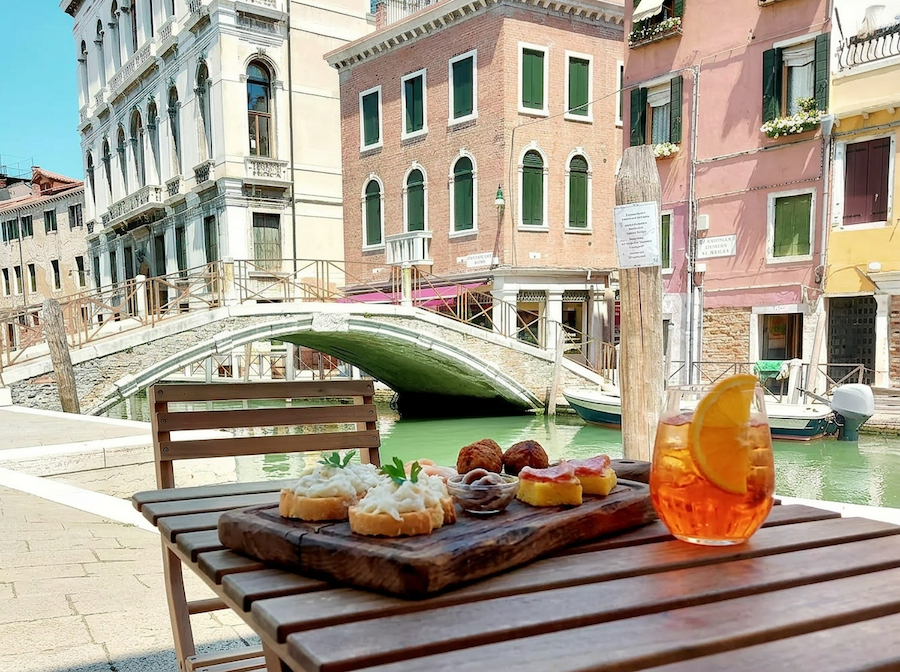
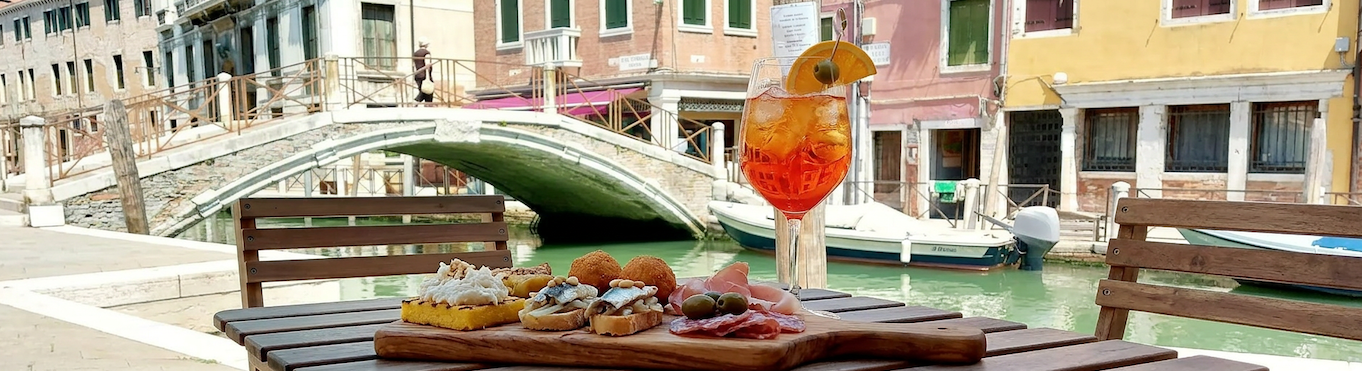
Cicchetti are small, one- or two-bite Venetian snacks traditionally served on bread or small plates. Classic versions include baccalà mantecato (whipped salt cod) on crostini, chicken liver crostini, marinated anchovies, and stuffed olives. At home, serve them on small plates — ideally mismatched vintage or majolica pieces — arranged loosely across a grazing table rather than plated formally. Abundance and visual variety matter more than precision.
Where can I find authentic Murano glass coupes and tumblers?
Authentic Murano glassware is available directly from Venetian glassmakers, many of whom ship internationally and have online shops. Look for pieces from established Murano workshops rather than mass-market reproductions — the slight irregularities in handblown glass are part of their appeal. Reputable antique dealers and auction sites are also excellent sources for vintage Murano pieces at a range of price points.
What cocktails work best for a Venetian-style home gathering?
The Aperol spritz is the natural anchor — Aperol, Prosecco, a splash of soda, and an orange slice. For variety, a Campari spritz or a simple Bellini (Prosecco and white peach purée, the original being from Venice's own Harry's Bar) fit the aesthetic perfectly. Keep it simple: two or three drink options at most, all pre-set on the cocktail cart so guests can help themselves without interrupting the flow of the evening.
How do I create a Venetian atmosphere at home without it feeling like a theme party?
The key is restraint and authenticity. Focus on quality objects and warm light rather than decorative motifs. Antique silver, handblown glass, wild flowers in mismatched vessels, and candlelight do most of the work quietly. Avoid anything overtly literal or costume-like — the atmosphere should feel like a beautiful evening that happens to be inspired by Venice, not a recreation of it.
What is the best way to style a cocktail cart for a home bacaro night?
Keep the cart curated but lived-in. A vintage cocktail shaker, a long bar spoon, a small ice bucket, and a tray of glassware are the essentials. Stock it with Aperol, Prosecco, and chilled Peroni for an authentic range of options. Add a candle, a small piece of artwork leaned against the wall behind it, and a tray of garnishes. The goal is a station that looks like it's always been there — intentional but effortless.






.webp)

.webp)


%20(2).webp)
.webp)


.png)